No products in the cart.
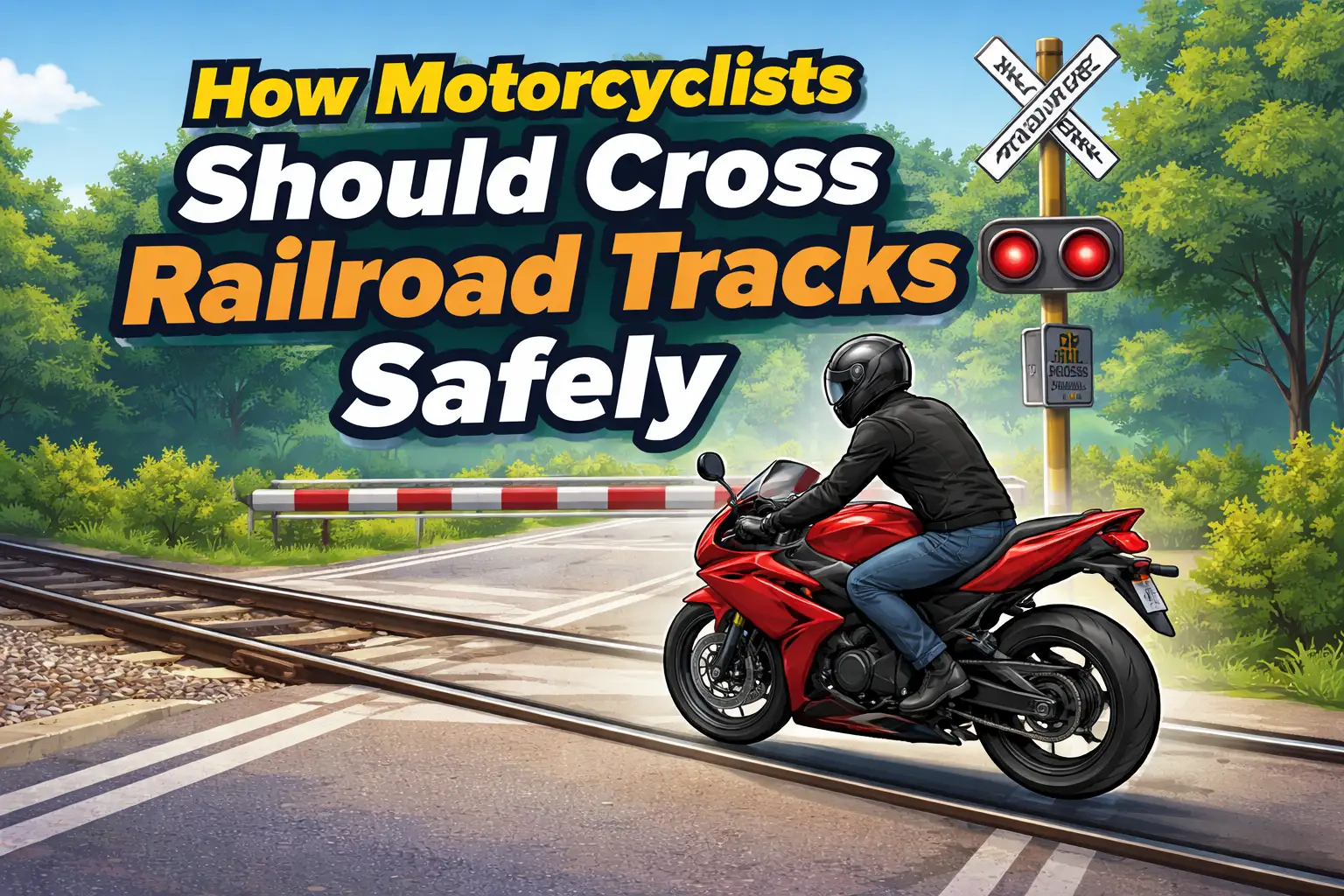
How Should a Motorcyclist Cross Railroad Tracks?
Crossing railroad tracks on a motorcycle requires extra care. Unlike cars, motorcycles are more sensitive to uneven surfaces. Tracks can be slippery, uneven, or angled, creating challenges for riders. Knowing the right steps can prevent accidents and keep you safe.
Here’s a detailed guide on how motorcyclists should cross railroad tracks safely:
Slow Down and Assess the Tracks
Before you reach the tracks, reduce your speed. Reaching too fast can cause you to lose control. Look ahead and assess the condition of the tracks.
- Are the tracks wet or dry? Wet tracks can be slippery.
- Are there any loose gravel or debris? These can make crossing dangerous.
- Is the track crossing at an angle or straight? Tracks that cross at an angle need extra caution.
Approach at a Right Angle
Always try to cross railroad tracks at a 90-degree angle. This is the safest way to avoid your tires slipping. Tracks that are crossed at an angle can cause the wheels to slide, especially if the surface is wet. If the tracks are angled, adjust your position in the lane to approach them straight. Use both hands to steer firmly and align the bike perpendicular to the tracks.
Keep a Steady Speed
When crossing the tracks, maintain a steady and controlled speed. Do not accelerate or brake suddenly. Sudden changes can cause the bike to lose balance. Use a lower gear to keep your motorcycle stable and maintain control. A consistent throttle helps you move smoothly over the tracks.
Rise Slightly Off the Seat
To absorb any shocks, lift slightly off your seat as you cross. Bend your knees and stand lightly on the footpegs. This technique helps you stay balanced if the bike shakes while crossing uneven tracks. By standing, you also reduce the impact on your spine and improve your overall control.
Avoid Sudden Turns
Never turn your handlebars sharply when crossing tracks. Turning or leaning while on the tracks increases the risk of your tires slipping. Instead, focus on keeping the bike upright. Let the motorcycle roll over the tracks in a straight line.
Watch for Gaps and Ridges
Railroad tracks often have gaps or ridges where the rails meet the road. These can trap your tires if you’re not careful. Look ahead and steer smoothly to avoid getting caught. Wider gaps can be dangerous, especially for thinner motorcycle tires.
Stay Alert for Oncoming Trains
Always check for approaching trains before crossing. Look both ways, even if the gates are up. Never try to beat a train by crossing quickly. Trains are faster and harder to stop than they appear. If lights are flashing or gates are lowering, stop and wait for the train to pass.
Follow Local Traffic Rules
Pay attention to signs or signals near the tracks. Some crossings have specific rules for vehicles, including motorcycles. Obey all warnings, stop signs, and signals. Local authorities design these measures to ensure safety for all road users.
Key steps for crossing tailored tracks on a motorcycle:
- Approach the tracks straight on, aligning your bike at a 90-degree angle to avoid your tires slipping or getting stuck.
Reduce your speed and shift your weight slightly toward the back for better balance and control.
Hold the handlebars and keep your speed steady as you ride over the tracks.
After crossing safely, gently increase your speed and return to your usual riding posture.
Conclusion
Crossing railroad tracks on a motorcycle can be tricky, but following the right steps ensures safety. Always approach tracks slowly and at a 90-degree angle. Stay steady, avoid sudden movements, and remain alert for trains. Taking these precautions will help you cross tracks smoothly and avoid accidents. Remember, safety is the priority, so never rush or take risks at railroad crossings.